
A CEO once spent years thinking communication was the soft stuff. The fluff between the real work. Then the company grew, and messages started getting lost, and teams got confused about priorities, and the culture that was supposed to exist was nowhere to be found.
It is the correct books that turn this upside down completely. It is communication that becomes the base upon which everything is built. It is not the fluffy element by any means, but the tough element that dictates whether the leader will be followed or only listened to. Some books picked with care may alter the way an individual comes across in each and every interaction.
The Best Communication Books for Leaders That Actually Change How People Lead
The search for communication books for leaders turns up a lot of generic advice about eye contact and speaking clearly. The real ones go somewhere else entirely. They dig into why tough conversations spin out and how to say hard things without wrecking relationships, and how to build trust with nothing but words.
“Crucial Conversations” by Kerry Patterson and Joseph Grenny is the heavyweight in this space. The book grabs those moments where stakes are high, and people disagree, and emotions run hot. The framework for staying in dialogue instead of shutting down or exploding has saved more careers than any business book in recent memory. The best communication books give leaders tools that work whether they are addressing a boardroom or sitting across from someone they need to let go.
Keach Publishing curates communication books that teach leadership skills.
Find Your Next ReadEffective communication in leadership skills
Leadership Communication Books That Bridge the Gap Between Strategy and Execution
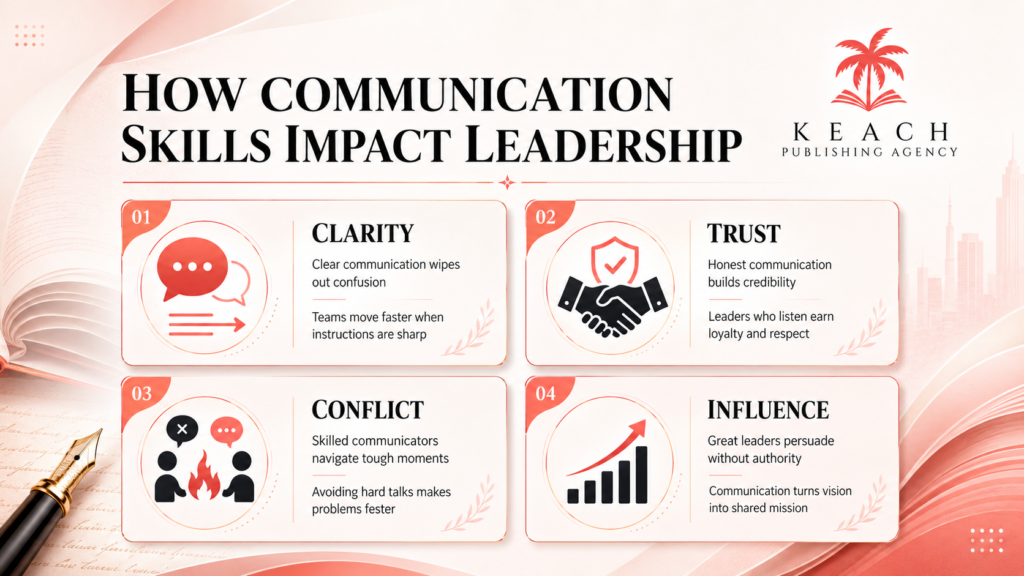
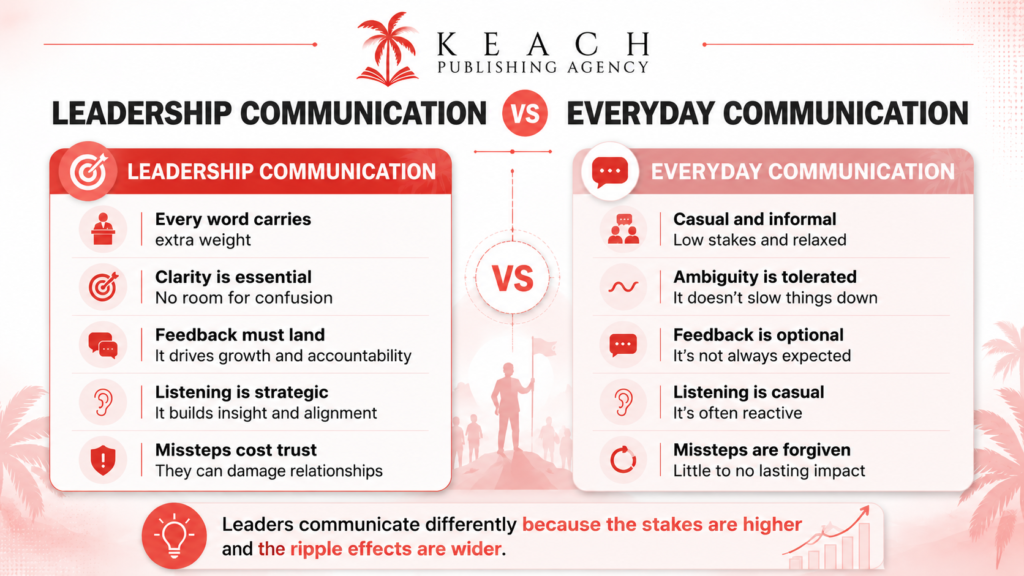
The best leadership communication books get that a leader’s words land with extra weight. A casual remark turns into a directive, and offhand criticism spirals into a crisis. Leaders do not get the same benefit of the doubt that regular conversation provides.
“Radical Candor” by Kim Scott lays out a framework for caring personally while challenging directly. The sweet spot between empathy and honesty is where real leadership communication lives. These best communication books help leaders navigate the constant pull between being liked and being effective.
For a broader look at related skills, this guide on negotiation books for business owners covers the overlap between talking and deal-making.
Leadership vs everyday communication breakdown
Effective Communication Books That Change How Leaders Listen
The most effective communication books put as much attention into listening as they do into talking. “Thanks for the Feedback” by Douglas Stone and Sheila Heen cracks open why receiving feedback feels so uncomfortable and how to get better at actually hearing it. The book flips the whole script from giving feedback to absorbing it.
Most leaders think they are solid listeners. Most of them are wrong. The gap between perceived listening ability and actual listening ability might be the biggest blind spot in leadership. These best communication books close that gap with techniques that work in real conversations instead of just in theory.
Business Communication Books for Leaders Who Want to Be Understood
The best business communication books treat clarity as its own form of kindness. Vague instructions and muddy expectations breed confusion and burn hours. Leaders who communicate with precision get better results with far less effort.
“Talk Like TED” by Carmine Gallo pulls apart the techniques behind the most-watched TED talks and turns them into principles any leader can grab. Storytelling, emotional hooks, and the rule of three. These best communication books help leaders craft messages that actually stick instead of dissolving into the background hum.
Communication Skills Books That Build Influence Over Time
The best communication skills books treat influence as something that can be learned rather than a natural gift. “Made to Stick” by Chip and Dan Heath digs into why some ideas catch fire and spread while others fade into silence.
The success framework breaks down the pieces of messages that actually lodge in people’s brains. Simple, unexpected, concrete, credible, emotional stories. These best communication books hand leaders a toolkit for making their words carry weight.
Words That Move People
The communication books that stick are not the ones read once and left on a shelf. They are the ones who shift how a leader shows up in every meeting, every one-on-one, and every hard conversation. The skills weave into who that person is as a leader until they stop feeling like techniques and start feeling like instinct.
We curate for this kind of lasting change. Books that have genuinely helped leaders communicate with clarity and listen with real intention. The right book at the right moment can tilt the whole trajectory of a leadership career.
Find more curated picks and resources for business leaders.
Visit Keach Publishing and find something worth your time.