The creation of the book is an individual task. The editing process is not. The writer has been residing in the book for months and sometimes even years and has lost touch with what actually happens in the pages. What seemed to be so brilliant late at night looks like complete gibberish after the sun rises.
Editing is the way to sort out this gibberish. This is not about fixing some errors or adding commas to certain places. Editing is about polishing the content to make it readable, comprehensible and interesting to the reader. Any good book that has ever seen print was edited many times. Those who avoid it prove it by their work.
What Is Book Editing and Why Every Manuscript Needs It
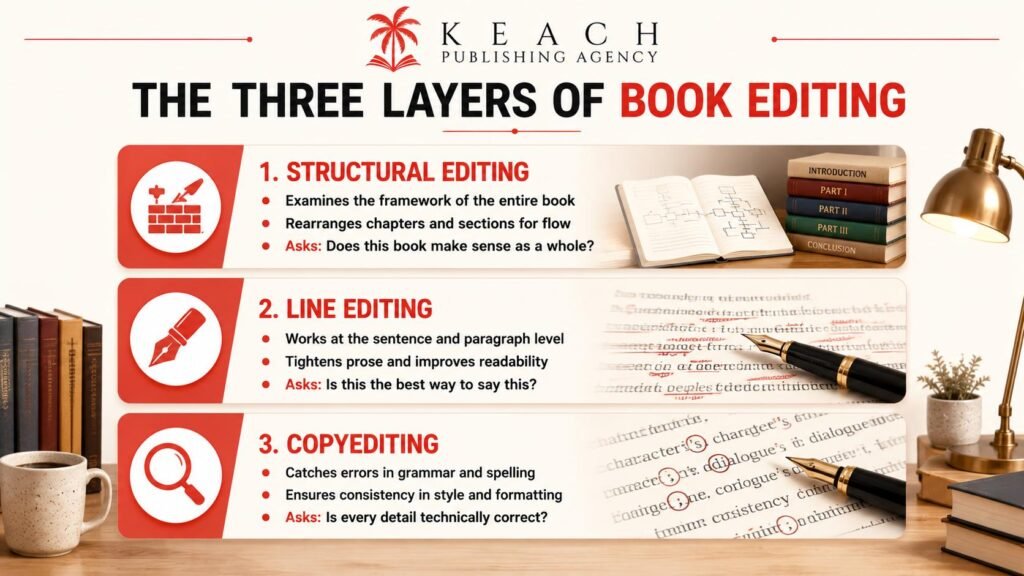
Understanding what is book editing means recognizing that it is not a single task. It is a series of passes that examine the manuscript from different angles. The first pass looks at the big picture. Does the structure hold together, does the argument make sense, and do the chapters flow in a logical order?
Later passes get more granular. Sentence structure, word choice, and rhythm. Then grammar and spelling and consistency. Good book editing treats each of these as a separate step because trying to fix everything at once guarantees that things get missed.
For a look at why professional help matters, this guide on professional book editing services covers the value of hiring an experienced editor.
Understanding the Three Stages of Book Editing
The Book Editing Process and How It Unfolds Step by Step
The book editing process follows a logical sequence. Developmental editing comes first because there is no point in polishing sentences that might get cut entirely. The editor reads the manuscript and provides feedback on structure, content, and flow. The author revises based on that feedback.
Line editing comes next. The editor goes deep into the prose, and the author revises again. Copyediting is the final pass before proofreading. Each stage of book editing catches different types of problems. Skipping a stage leaves those problems for readers to find. Manuscript editing that follows this sequence produces a finished book that feels effortless to read.
Keach Publishing connects first-time authors with professional editors.
Start the Conversation and get your Book Ready for Readers.Professional Book Editing and Why Self-Editing Is Not Enough
The argument for professional book editing is not that authors are incapable of editing their own work. It is that they are incapable of being objective about it. The writer knows what every sentence is supposed to say. The reader only knows what it actually says.
A book editing professional provides the fresh perspective that catches gaps in logic and confusing transitions and places where the author’s intended meaning got lost on the way to the page. The best authors in the world work with editors for exactly this reason.
The Difference Between Editing and Proofreading
Proofreading is the final check for typos and formatting errors. It is the last thing that happens before publication. Book editing is the deeper work that happens before proofreading becomes relevant. Confusing the two leads to manuscripts that are free of spelling errors but still fundamentally flawed in structure and clarity.
A book editing process that only includes proofreading is like painting a house before fixing the cracked foundation. It looks better temporarily, but the underlying problems remain.
A Manuscript That Is Ready to Be Read
Editing is not punishment for bad writing. It is the process that turns raw potential into something polished and professional. Every book that has ever moved a reader or changed a mind went through multiple rounds of editing before it ever reached an audience.
We connect authors with editing services that strengthen every aspect of a manuscript. Structure and flow and grammar and voice all get the attention they deserve. The book that goes to print is the best version of itself.
Let Keach Publishing connect you with a professional editor who fits your project.
Give us a Call.